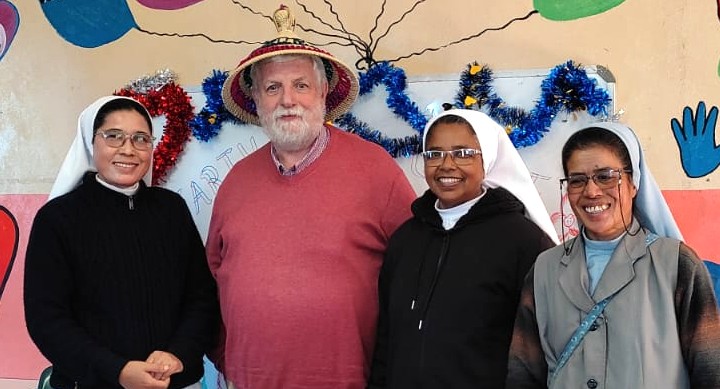
Fr. Martin McCormack SDB
Lesotho rises, almost unexpectedly, out of southern Africa: a small, landlocked kingdom entirely surrounded by South Africa, lifted into mountains, valleys, ridges and open sky. Known as “the mountain kingdom in the sky”, Lesotho is a place where geography is not simply landscape. It is identity. It shapes the roads, the homes, the climate, the work, the culture and the character of its people. To enter Lesotho is to enter another rhythm.
It was a Sunday afternoon when Kennedy and I crossed the border. Before we reached the mission, we had to manoeuvre through 50 kilometres of potholes, a road that seemed to say immediately that in Lesotho beauty and hardship are never far apart. Then came the welcome: warm, generous, unmistakably Salesian. Fr. Lingoane from Lesotho and Fr. Peter from Vietnam received us with kindness. Soon afterwards, the skies opened and an almighty thunder and lightning storm broke over the mountains. It felt as though the kingdom itself was announcing our arrival.
A return
For me, this was more than a visit. It was a return. In 1982, I had served here as a deacon, when the mission was still in its infancy. I did my first baptisms in this place. Lesotho is a country of dramatic contrasts. Its land rises into highlands and windswept plateaus. Roads climb and turn through mountain passes. Villages appear suddenly on hillsides, as if placed there by hand. Shepherds move across the land wrapped in the traditional Basotho blanket. Ponies still carry people through rural areas where roads are poor and distances are demanding. The conical Basotho hat, the mokorotlo, echoes the shape of the mountains and remains a proud symbol of national identity.
Climate
Lesotho’s climate is shaped by altitude. Summers bring rain, green hills, sudden storms and spectacular skies. Winters can be bitterly cold. In the highlands, snow is common. Frost, icy winds and freezing nights are part of ordinary life. It is a country of wool blankets, mountain winds, stone houses and children walking long distances to school in the cold.
Here, poverty is seen in the child walking far to school, in the parent struggling to provide a uniform, in the young person searching for work, in the family worried about food, transport, heating and healthcare.
It is also a country of dignity, resilience and deep cultural pride. The Basotho blanket is more than protection against the cold; it is a sign of belonging. The pony is more than transport; it is part of a mountain way of life. The village is more than a settlement; it is memory, family, faith and survival woven together.
Salesian Mission
Today, the Salesians oversee a church where around 1,500 people gather for Sunday Masses. In a country where life is often demanding, people still come together in prayer, music, faith and community.
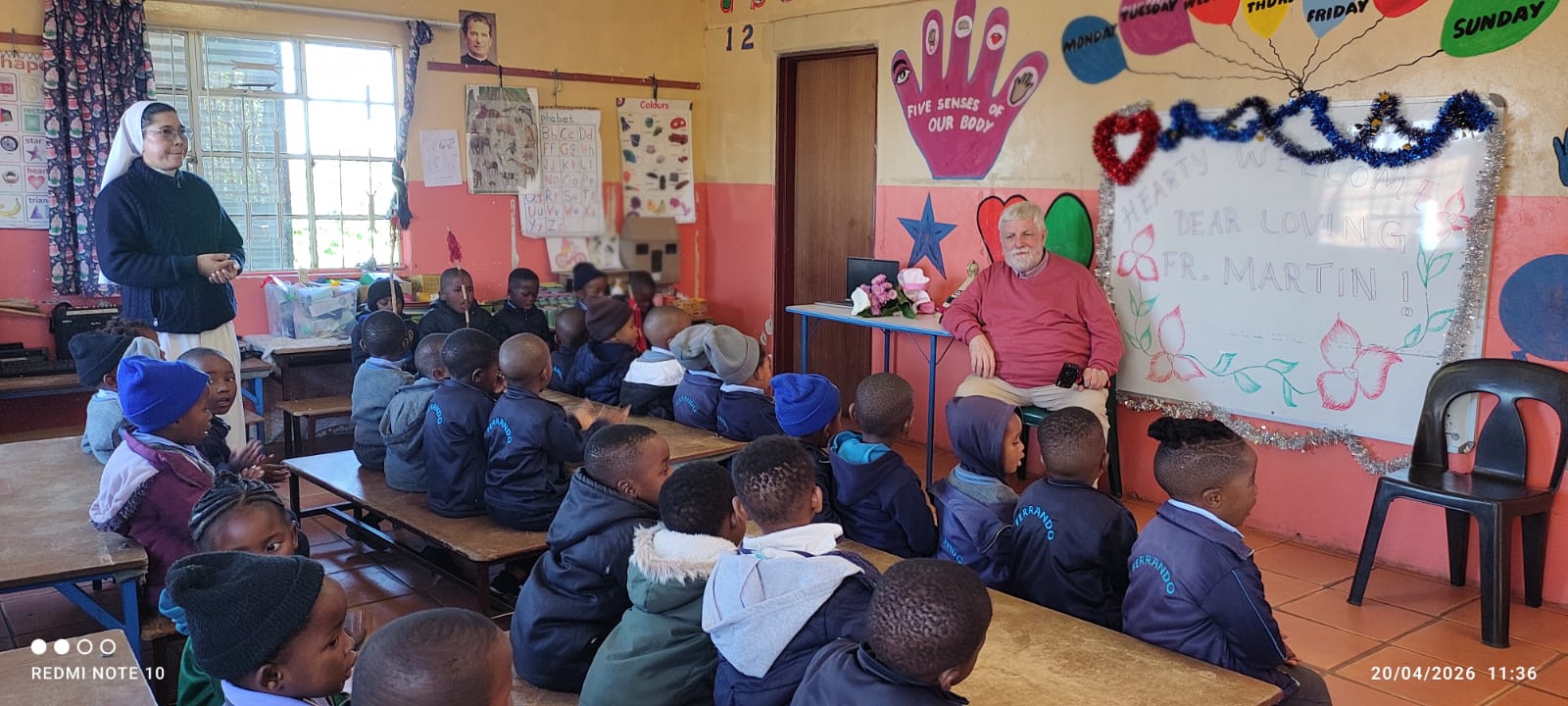
Behind the mountain scenery are the children and young people whose futures are being formed day by day. In the Maputsoe area, St. Luke’s Primary School has 1,615 children. St. Boniface High School serves 925 students. Chaka Outstation Primary School has 125 children. Laura Vicuña Pre-School cares for 142 children. The Mazzarello Vocational Centre is training 81 young adults. The Oratory welcomes around 2,000 young people.
Ninety-two kilometres away, in Maseru, the mission oversees Seleso Primary School with 534 children, Abia High School with 621 students, and the Maseru Oratory, which welcomes approximately 500 young people.
These are more than numbers. They are names, faces, stories and futures. They are children carrying schoolbags, teenagers searching for direction, young adults learning skills, teachers giving themselves daily, and families hoping that education will open a door that poverty has kept closed for too long.
In Lesotho, education is one of the clearest paths towards a better future. However, in a mountain country, education is never simple. Distance, cold, hunger, lack of transport, books, uniforms and school fees can all become obstacles. A child may have the desire to learn, but desire alone is not always enough.
This is why the Salesian presence matters.
In the spirit of Don Bosco, the oratories at Maputsoe and Maseru, offer young people safety, structure, friendship, guidance and hope. They tell the young that they are seen. They tell them that their lives matter.
Lesotho’s mountains lift the eyes upward. Its children bring the story back to earth. In their faces we see the real meaning of hope. They are the future of this beautiful, fragile and resilient country. To stand with them is to stand with Lesotho itself.
Our Salesians are not simply admiring the kingdom in the sky. They are helping, day by day, to build a future of dignity, education, faith and possibility in the valleys below. They do so under great struggles and with dignity.