Did you know that 2026 is the United Nations International Year of the Woman Farmer? This year, we would like to celebrate and recognise the work of women in agriculture across the globe. Women farmers play an essential role in agrifood systems throughout the world. However, they receive little recognition for their vital work in the broader picture of global food security. Women farmers today also face numerous challenges, including land tenure issues, discrimination, financial and technical constraints, and limited access to services and education. As we mark the International Year of the Woman Farmer 2026, we call on governments, organisations and communities to recognise, invest in and empower women in agriculture. This year, we are working with Misean Cara and Dóchas to highlight the role of women farmers globally, with support from the European Union. Ireland is currently holding the Presidency of the Council of the European Union, and, as part of this, efforts are being made to bring attention to global challenges of climate and food security. Women farmers are a key part of this broader picture, and their hard work and resilience continues to uphold global food security despite the difficulties that climate change brings. With the help of Misean Cara/Irish Aid, the Salesians of Don Bosco are working to support women in agriculture in many different countries, including Kenya, South Sudan, and India.

Kenya
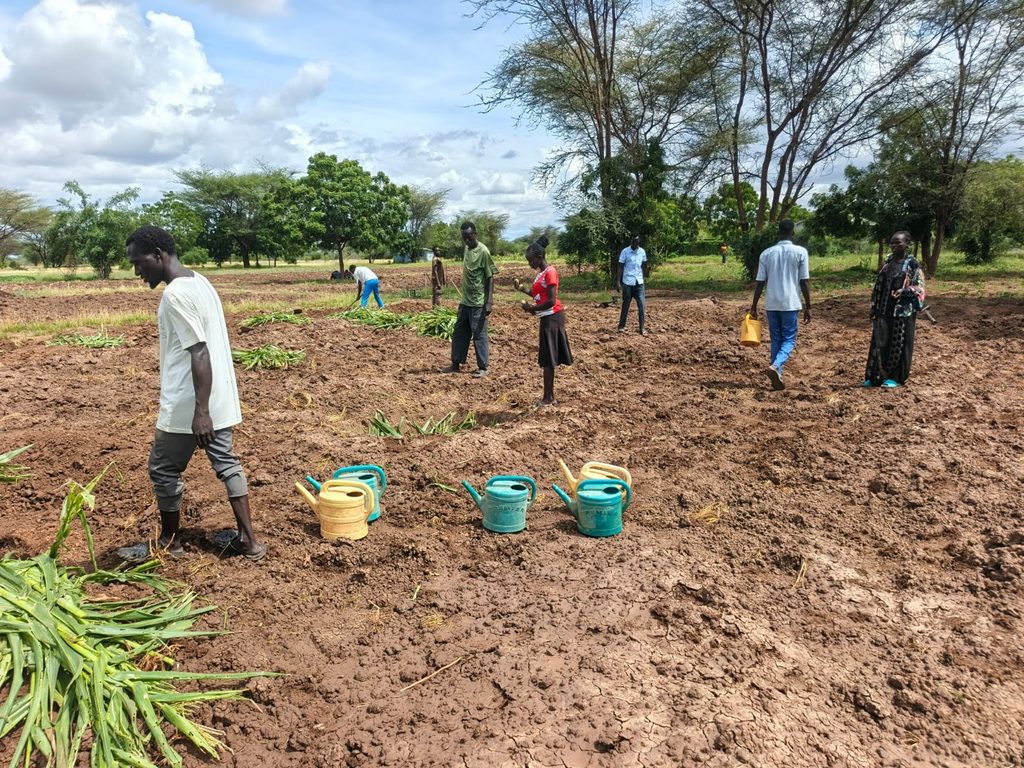
In Kakuma, Kenya, a Salesian-run demonstration farm supports women and their families from a refugee camp hosting 300,000 people, as well as those from the local Turkana community. Both groups of women are marginalised and vulnerable, and they face considerable challenges in supporting their families. The Salesians support these women through practical agricultural training, access to farm produce, and opportunities for income generation.
The agricultural training includes a three-month course on kitchen-gardening, which leads to greater food security for these women and their families. Local women from the host community and the refugee camp also benefit from the supply of fresh vegetables from the demonstration farm, which they can buy at a reasonable price, thus giving them access to nutritious, locally-grown food for themselves and their families.
In addition, the farm supports women entrepreneurs from the surrounding community who regularly collect vegetables produced on the farm for sale. This provides them with an opportunity to participate in the agricultural value chain and generate income through the buying and resale of fresh vegetables. The availability of locally produced vegetables provides these women with a reliable source of produce for their small businesses.
A newly drilled borehole has strengthened vegetable production by providing a reliable source of water for irrigation, helping maintain production during dry periods. The project has also expanded banana and fruit-tree production and promoted composting and other sustainable agricultural practices. These initiatives demonstrate practical, climate-resilient farming methods that can benefit women farmers and entrepreneurs in the surrounding community.
Through practical training, employment of local women, access to produce, and livelihood opportunities, the project contributes to women’s skills development, income generation, food security and greater participation in sustainable agricultural value chains, particularly among refugee and host-community women.
South Sudan
In Gumbo, Juba, South Sudan, Misean Cara and the Salesians of Don Bosco are investing in and empowering women farmers. They have woven together practical agricultural learning, food security and livelihood development into a model that is transforming the lives of women and their families in one of the world’s most fragile humanitarian contexts. The IDP (Internally Displaced Persons) community in Gumbo has experienced significant displacement, economic hardship and loss of livelihoods. For women, these challenges are compounded by limited decision-making power and exclusion from agricultural support systems.
The Salesians are working to equip these women, and have provided training in horticulture and agriculture for 150 women in Gumbo. 75% of trained households reported improved food security, while 95% reported a reduction in post-harvest losses through better storage and preservation practices. Empowerment is an important element of this project too, with 75% of households reporting improved women’s participation in agricultural decision-making.
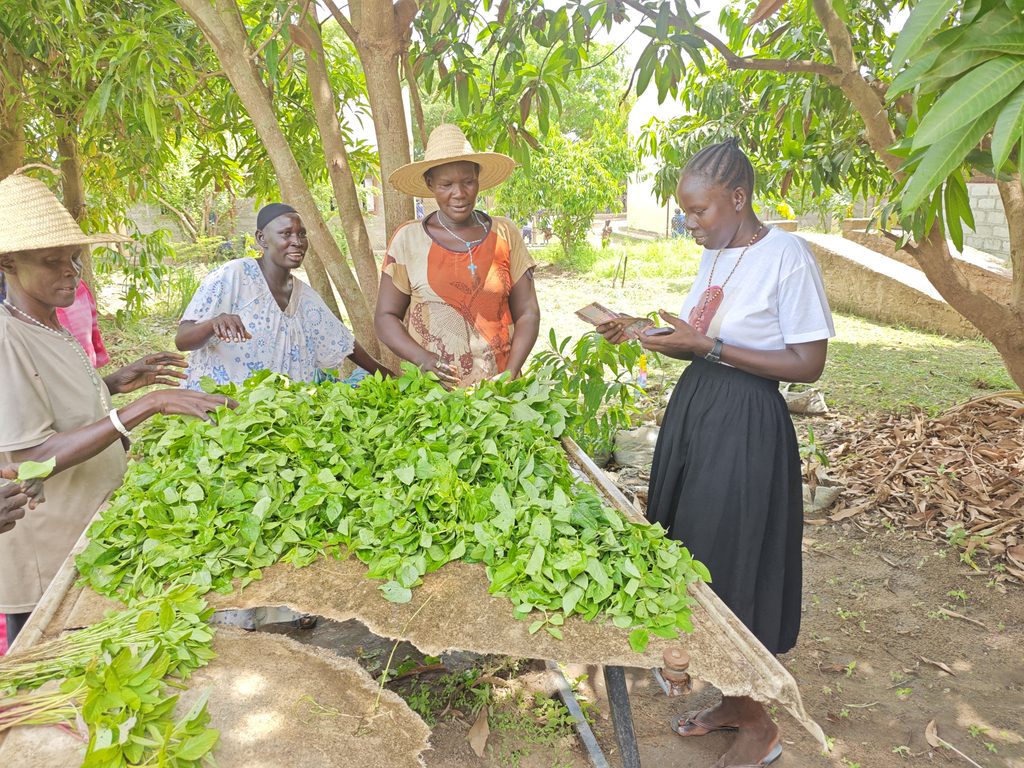
The photo below shows women farmers from the IDP camp in Gumbo preparing their freshly harvested vegetables for sale, demonstrating how small-scale agriculture is strengthening household livelihoods and food security. With a buyer already secured before reaching the market, the harvest provides an immediate source of income while contributing nutritious, locally produced food to households within and around the IDP camp. This initiative highlights the resilience and entrepreneurial spirit of women as they turn agricultural production into a pathway toward improved nutrition and economic empowerment.
India
In Karnataka, India, the Salesians and Misean Cara/Irish Aid support disadvantaged women to engage in goat-rearing as a sustainable livelihood opportunity. These women are the most vulnerable and excluded group in this region. They belong to castes/tribes which are socially, economically, and politically oppressed and underprivileged, and they also face gender discrimination in employment and access to resources. Lack of education and skills training is also a major challenge; the literacy rate among rural Karnataka women is below 50%. However, the goat-rearing project provides these women with an income-generating opportunity, which in turn increases the opportunities available for their families. The women receive training in women’s rights, entrepreneurial skills, leadership and communication, and production skills for goat-rearing. Furthermore, this project goes beyond supporting individual women in the long term. It will promote goat-rearing as an income-generating opportunity through a trained pool of women entrepreneurs with a long-term plan of building goat-rearing clusters among women in the rural villages.
Devamma, 52, from Bandhalli Village, Yadgir Taluk, India, is a single mother of five children. After her husband abandoned the family and married another woman, Devamma struggled to provide for her children. With no stable income, she depended on daily wage labour. Due to financial difficulties, she was unable to care for all her children and had to leave them with their grandparents.
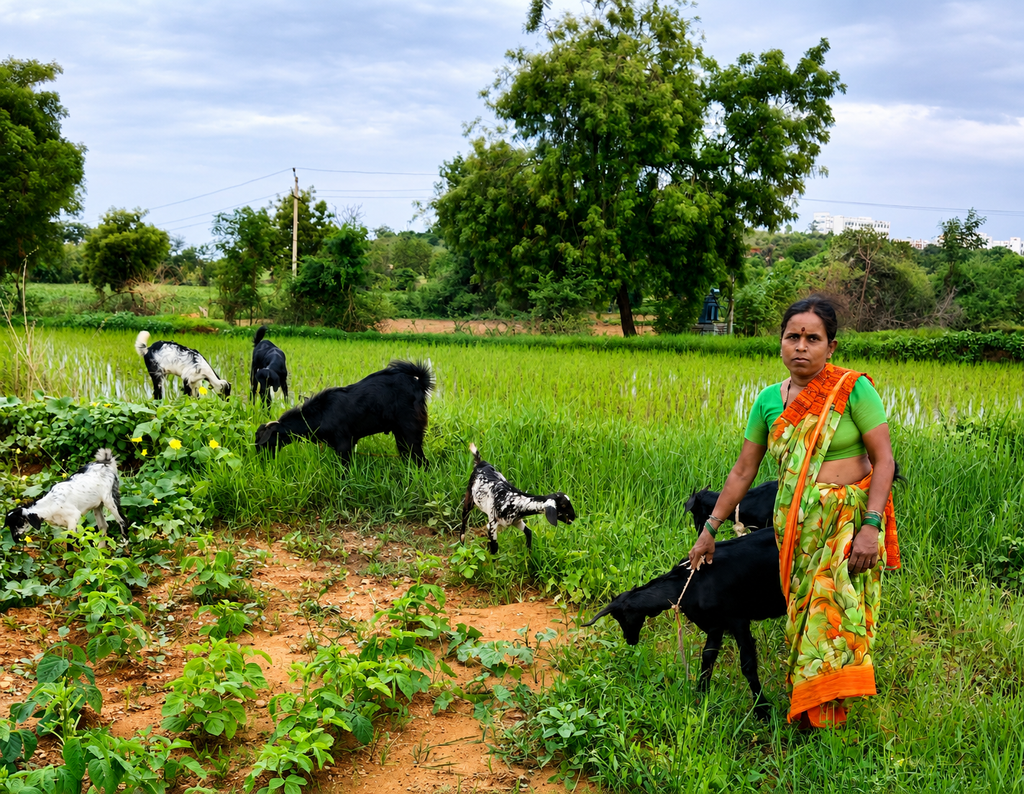
With support from the Salesians of Don Bosco and funding from Misean Cara/Irish Aid, Devamma received livestock management training, which gave her the confidence to start livestock rearing with two sheep. Now, she has eight goats—two adult goats and six young ones. Encouraged by her growing income and confidence, she also accessed loans through her Self-Help Group (SHG) to purchase additional goats. She now sells goats seasonally, generating additional income, while the milk helps improve her family’s nutritional needs. The income from goat rearing has also enabled Devamma to support her son in purchasing an auto-rickshaw through a bank loan, providing a more stable source of family income. Most importantly, Devamma has been able to bring all her children back home. She tells us:
“Earlier, I struggled even to take care of my children and had to leave them with their grandparents. The support and training gave me confidence to rear goats and earn an income. Today, I have brought all my children back home, and I am happy that I can support my family.”
If you would like to support women like Devamma to develop their livelihoods through agriculture, please donate today.